The Quiet Shift Changing the Global Healthcare Industry
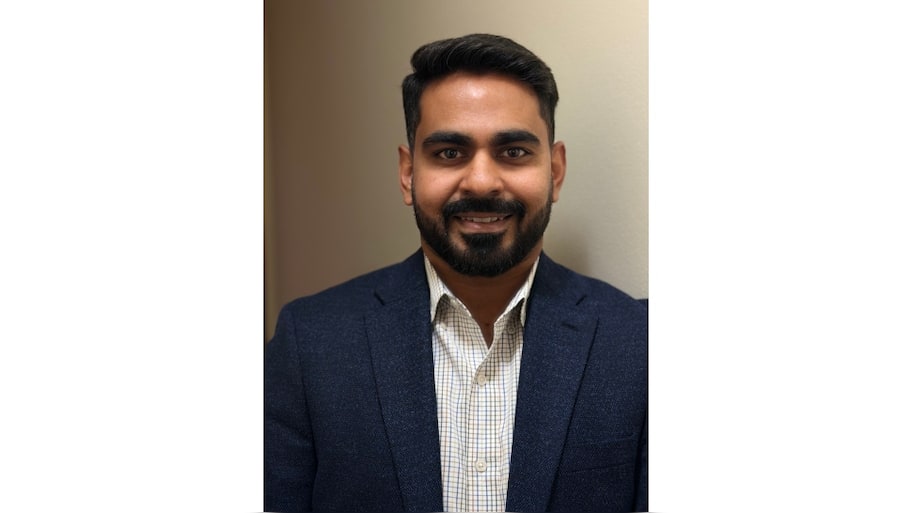
The current scenario is such that with the aging generation and the growing number of people being caught in the trap of lifestyle diseases, the bitter fact is being brutally realized that it is not possible to provide healthcare to all. It is in these innumerable disturbances that the emergence of the requirement for a completely new approach in healthcare with the innovative application of technology came into the picture, and at the helm of this is the innovative online monitoring system by the use of IoT gadget with the innovative edge of the researcher-engineer Chetan Sasidhar Ravi.
Made public through the IEEE Asian Conference on Intelligent Technologies in 2024, such a technological solution embodies a general movement within the medical field as far as attitudes on solution provision from a reactive to a proactive or continuous approach. From a reactive approach where recourse is sought through individual visits and emergencies, medical professionals can now track and intercept early signs before they pose a problem.
What makes this particular initiative important has less to do with the specific technology that this initiative applies and more with the fact that this particular initiative has this down-to-earth approach when it comes to design that emphasizes reliability, understandability, and scalability in particular.
From Wearables to Healthcare Decisions: Creating a Connected Healthcare Ecosystem
Modern healthcare can be termed a domain where huge data are being created, and most of the time, these data remain fragmented or unused. The model conceptualized by Ravi fights this problem with an innovative health monitoring system that integrates wearable devices, body sensors, cloud computing, and machine learning.
Data such as patients' information, heart rates, blood sugar levels, patterns of physical activities, and even sleep patterns are transferred safely via Bluetooth, mobile connections, or Wi-Fi connections to cloud systems designed for continuous analysis. Instead of flooding doctors with raw information, it is reduced to an easily understandable, comprehensive form.
This tool represents an important tenet of engineering: tech should relieve the users of the mental burden rather than contribute to it. Healthcare experts are provided with an easy-to-use dashboard that will alert them to peculiar activity, trends, or notifications so that they can make decisions faster but not at the expense of messing up their routine.
Intelligent Analytics That Clinicians can Trust
One problem in implementing such digital health systems in practice relates to building trust. A system that provides too many false alarms and/or whose functionalities are opaque will only provoke resistance among healthcare practitioners. The particular research effort seeks to solve this problem by implementing transparent analysis processes.
Such tools employ trustworthy statistical techniques like adaptive smoothening and individualized baselines that can defy interference and maintain relevant cues for good health. The AI part of the tools learns and develops the ability to sync with the individual cycles of each person’s bodily system and understand that “normal” need not necessarily be the same for everyone.
These prediction models will aid in identifying small trends that may indicate impending dangers in the future, and thus, actions can be taken prior to any unnecessary warnings being raised. This has brought forth the aspect that the warnings medical practitioners receive are rapid, accurate, and readily comprehensible from the medical perspective.
Even more significantly, it eliminates the risk of alert fatigue, which is especially useful in the medical context, in addition to being useful in a home environment. As a result of the minimized risk of false alerts, physicians can respond with confidence, whereas patients feel cared for rather than overwhelmed by the alert system itself.
Standardized Measurement of Patient, Provider, and System-Level Impacts
The initial coding implementations and verification experiments done for the given work have brought improvements daily about a patient care point of view. The importance of results in the real world, such as response time, robustness, productivity, or cost, rather than scores, has been explained in the context of the work done.
The benefits identified are:
- Lower latency of alerts, implying quicker reaction time of medical staff
- False alarms were reduced, so the confidence and burnout of the staff were enhanced
- Patient engagement and satisfaction
- The reliance on emergency measures has been reduced
- Specific and observable reductions in cost of care
These are significant in highlighting the overall message conveyed through the presentation, which states: “Innovative digital health success has to never be about disengaging healthcare professionals, but about the potential to support more informed, upfront healthcare decisions. And the system will support healthcare groups in making better use of resources, while continuing to provide the highest level of safety.”
Global Relevance and Future-Compression Solutions
Although tested within a controlled and trial setting initially, the design takes a more global approach. The building block design can be utilized in any health delivery setting, whether in an urban area or a rural area that doesn’t offer the opportunity to assemble in a personal setting.
It also has its sights on the future when it comes to growth: There is much that the platform could pull into its scans, comments from the physician, and community risk factors, to name a few of the many elements that the platform could employ in a very transparent fashion. And no doubt that same system could be an asset when it comes to general health concerns.
In the modern world, where healthcare around the globe is struggling to find feasible solutions, such a project is one way to show that design can meet technological advancements with the needs of mankind.
As we believe, intelligent health systems truly have the power of "acting early, explaining clearly, and winning the trust of clinicians and patients," as explained by Ravi. "If technology is augmenting rather than supplanting judgment, the results will be good for everyone."
A Model of Research Translating into Societal Value
The relevance of this project surpasses that of just one tool or one paper. It is representative of a certain kind of research by hands-on expansion that binds technical engineering skills with real-world practical impacts-of which our world of innovations requires optimally.
By challenging existing medical obstacles and describing well-defined results, together with the dissemination of concepts through valid IEEE channels, a model has been set for incorporating technology in an intelligent and well-staged method within the future of health care. Due to rising medical costs and shortages of medical personnel currently facing or about to affect many countries, devices such as the extendable smart monitoring system developed could become the hallmark of health care in the coming years.
Today, when healthcare innovation needs to be principled and impactful, the IoT-driven approach in the delivery of healthcare through seamless care using data and turning research into enduring strength is an inspiring model that it provides.
Stay informed on all the latest news, real-time breaking news updates, and follow all the important headlines in india news and world news on Zee News.