हिन्दी
English
मराठी
বাংলা
தமிழ்
മലയാളം
ગુજરાતી
తెలుగు
ಕನ್ನಡ
ଓଡ଼ିଶା
Business
Tech
World
Health
NEWS
VIDEOS
PHOTOS
Web Stories
LIVE TV
GO
Latest
India
Ahmedabad
Bengaluru
Chennai
Hyderabad
Kolkata
Mumbai
Pune
Cricket
Success Story
Entertainment
Hollywood
Music
Bollywood
Television
Regional
Movie Review
Lifestyle
Relationship
Travel
Food & Recipes
Fashion
Culture
Spirituality
Business
Economy
Markets
Companies
Real Estate
International Business
Personal Finance
Automobile
Technology
Gadgets
Gaming
Internet & Social Media
Apps
Mobiles
World
Asia
Africa
Americas
Australia-Oceania
Europe
Auto
Mobility
Viral
Diabytes
Fables of Facades
Archived Videos
Newsletter
Fables of Facades
Latest
India
Cricket
Success Story
Entertainment
Lifestyle
Business
World
Auto
Mobility
Viral
Fables of Facades
Archived Videos
Latest
India
Cricket
Success Story
Entertainment
Lifestyle
Business
World
Auto
Mobility
Viral
Fables of Facades
Archived Videos
Advertisement
X
News
General Budget 2019
General Budget 2019 News
Union Budget 2019
08 Jul 2019
Union Budget 2019 laid down good platform for sustainable economic growth
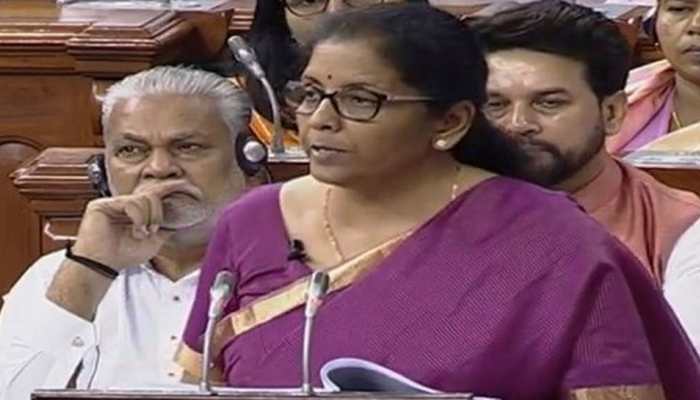
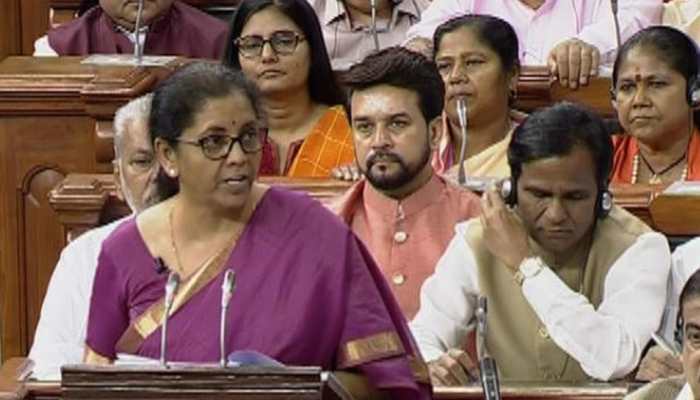
Finance Minister Nirmala Sitharaman in her maiden Budget address laid out a clear road map to make India a $5 trillion economy by 2024.
Union Budget 2019
05 Jul 2019
FM announces slew of provisions, exemptions, tax benefits for Indian start-ups
Start-ups and their investors who file requisite declarations and provide information in their returns will not be subjected to any kind of scrutiny in respect of valuations of share premiums, Nirmala Sitharaman said.
Union Budget 2019
05 Jul 2019
Biz with less than Rs 5 cr annual turnover to file return quarterly GST
Nirmala Sitharaman also proposed to move to an electronic invoice system wherein invoice details will be captured in a central system at the time of issuance in Union Budget 2019.
Union Budget 2019
05 Jul 2019
Union Budget 2019: 25% Corporate Tax for firms with turnover up to Rs 400 cr
Nirmala Sitharaman said reduction in corporate tax rate will cover 99.3% of the companies. Now only 0.7% of companies will remain outside this rate.
Union Budget 2019
05 Jul 2019
Union Budget 2019: FM announces Rs 70,000 crore PSU bank recapitalisation
Nirmala Sitharaman presenting Budget 2019 said NPAs of commercial banks have reduced by over 1 lakh crore over the last year, record recovery of over 4 lakh crore due to IBC and other measures has been effected over the last four years.
Union Budget 2019
05 Jul 2019
Union Budget 2019: Govt hikes divestment target to Rs 1.05 lakh crore
Nirmala Sitharaman in the Budget 2019 speech further informed that Government will undertake strategic sale of PSUs and continue to do consolidation of PSUs in the non-financial space as well.
Union Budget 2019
05 Jul 2019
Union Budget 2019 presented with a 10-year vision in mind: Nirmala Sitharaman
Addressing a press conference after the presentation of the Union Budget 2019, the Finance Minister said that the emphasis was very clearly on the overall development of economy.
Union Budget 2019
05 Jul 2019
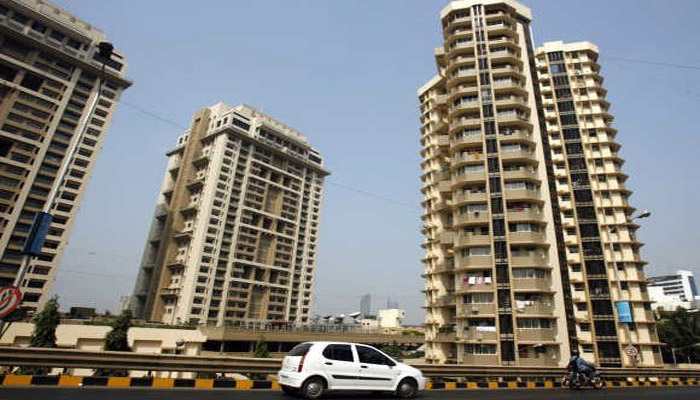
Additional deduction of up to Rs 1.5L for interest paid on home loan
A person purchasing an affordable house will now get an enhanced interest deduction up to Rs 3.5 lakh.
Union Budget 2019
05 Jul 2019
What's cheaper, what's dearer after Union Budget 2019
As part of road and infrastructure cess (customs), the government has decided to hike the cess on the fuel products from Rs 8 per litre to Rs 9 per litre.
Union Budget 2019
05 Jul 2019
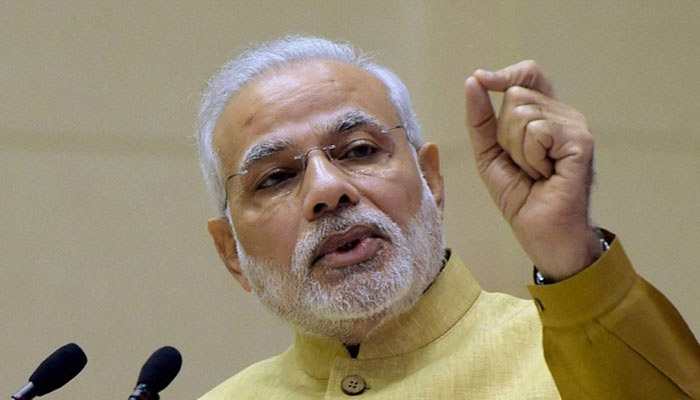
Union Budget 2019: This is the budget of hope and expectation, says PM Modi
Modi further said that the Budget has set the tone for tax structure to get simplified and infrastructure getting modernized.
Union Budget 2019
05 Jul 2019
Union Budget 2019 highlights live updates
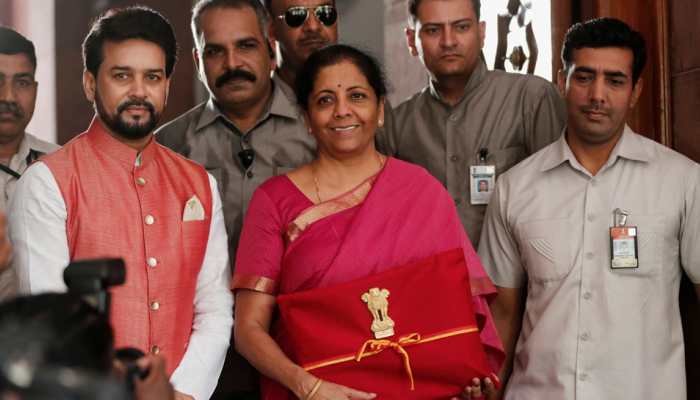
Union Budget 2019 is the maiden budget for Union Finance Minister Nirmala Sitharaman, who becomes the second woman finance minister to do so. She called on President Ram Nath Kovind at the Rashtrapati Bhavan before presenting her first Union Budget.
Union Budget 2019
05 Jul 2019
Union Budget 2019 live: 3% increase in Income tax for those earning Rs 2-5 cr
Expectations are high from the Union Budget 2019, given that PM Modi came back to power following a bigger mandate than his first term. As such, Finance Minister Nirmala Sitharaman will have to do a tough balancing act, as she aims to boost growth.
Economic Survey 2019
04 Jul 2019
Investments in employment important for inclusive development: Economic Survey
Economic Survey 2018-19 stated that public investments in social infrastructure like education, health, housing and connectivity is important for inclusive development of the country.
Economic Survey 2019
04 Jul 2019
7% growth pegged by the Economic Survey 2019 is a pragmatic target: CII
CII said that it is in affirmation with the Survey’s key prognosis that for sustaining growth at 8 percent, investment would need to be the “key driver” for heralding simultaneous growth in demand, jobs, exports & productivity.
Economic Survey 2019
04 Jul 2019
Economic Survey 2019 stresses on reducing economic policy uncertainty
This factor has been termed especially important in context of the Survey’s recommendations for shifting gears to an investment driven growth model for the country.
Economic Survey 2019
04 Jul 2019
India’s forex reserves comfortable, CAD remains within manageable levels
The Economic Survey 2019 notes that India’s External Debt was USD 521.1 billion at end-December 2018, 1.6 percent billion lower than its level at end-March 2018.
Economic Survey 2019
04 Jul 2019
Economic Survey 2019 calls for redesigning minimum wage system in India
The Economic Survey 2018-19 states that an effective minimum wage policy that targets the vulnerable bottom rung of wage earners can help in driving up aggregate demand and building and strengthening the middle class, and thus spur a phase of sustainable and inclusive growth.
Economic Survey 2019
04 Jul 2019
Economic Survey presents blueprint for India to become $5 trillion economy
The Economic Survey 2018-19 clearly stated that the year 2019-20 has delivered a huge political mandate for the government, which augurs well for the prospects of high economic growth.
Economic Survey 2019
04 Jul 2019
Ecosystem for insolvency and bankruptcy getting systematically built out
Till March 31, 2019, the Corporate Insolvency Resolution Process yielded a resolution of 94 cases which has resulted in the settlement of claims of Rs 1,73,359 crore.
Economic Survey 2019
04 Jul 2019
Economic Survey 2018-19: Key Highlights
The Economic Survey has projected India would grow at 7 percent in 2019-20 and maintain its fastest growing large economy tag in the world.
1086856
1
2
Loading...
Trending news
DNA Video
DNA: Power Theft Allegations Against SP MP Ziaur Rahman Barq
DNA Video
DNA: Hot Tea Linked to Cancer Risk!
DNA Video
DNA: Why Jordan Fears After Syria’s Coup?
DNA Video
DNA: Gandhi Family Ruined My Career, says Mani Shankar Aiyar
DNA Video
DNA: NSA Ajit Doval’s China Visit - Inside Story
DNA Video
DNA: Ground Report- Tight Security Arrangements for Mahakumbh
DNA Video
DNA: Who got superstar Allu Arjun arrested?
DNA Video
DNA: US announces 100-point plan for Islamophobia
DNA Video
DNA: Revelation! Were rioters outsiders in Sambhal?
DNA Video
DNA: Why Muslims in UP Tracing Their Hindu Roots?
Subscribe Now
×
Enroll for our free updates
Please enter full name.
Please enter valid email address.
https://zeenews.india.com/
Subscribe Now
Thank you
×
Cookies Settings
Reject
Accept Cookies
NEWS ON ONE CLICK


 Diabytes
)
)
)
)
)
)
)
)
)
)
)
)
)
)
)
)
)
)
)
)